


Diagnosing and treating your patients with APDS
Click through the topics below to review the pathogenesis of APDS and the clinical signs that prompt urgent diagnosis and treatment.

Pathogenesis of APDS
APDS is an autosomal dominant inborn error of immunity, characterised by immune deficiency and dysregulation, causing recurrent and potentially life-threatening infections, lymphoproliferation and lymphoma.1–8 APDS affects around 1–2 people per million worldwide.8
In patients with APDS, pathogenic gain of function mutations in PIK3CD (APDS1) and loss of function mutations in PIK3R1 (APDS2) result in PI3Kδ hyperactivity.1–3

Hyperactive PI3Kδ signalling results in abnormal development and maturation of B and T lymphocytes.9,10 These changes lead to immune deficiency and dysregulation, resulting in people with APDS experiencing severe and chronic symptoms within multiple organ systems.5,8,10,11
Common clinical manifestations of APDS:

Severe, recurrent, persistent infections
- Sinopulmonary (may occur in 96–100%)5,12,14
- Herpesvirus (38–49%),5,13 EBV (20–28%)6,13 and CMV (13–15%)5,13

Lymphoma and other malignant diseases (13–28%)5,6,14

Enteropathy (15–35%)3,5,6,13

Lymphoproliferation (>70%)5,6,12,14,15
- Lymphadenopathy (58%)6
- Splenomegaly (44%)6
- Hepatomegaly (24%)6
- Nodular lymphoid hyperplasia (32%)5

Neuro/cognitive symptoms (14%)6
- 10–19% in APDS15,6
- 27–31% in APDS26,14

Sclerosing cholangitis and cirrhosis5
- Sclerosing cholangitis (4%)
- Cirrhosis (6%)

Autoimmunity (28–42%)5,6
- Cytopenias (30%)12
- Multiorgan autoimmunity (7%)6
- Autoimmune disorders6
- Autoinflammatory disorders6

Allergy and asthma (6–86%)6,13,16
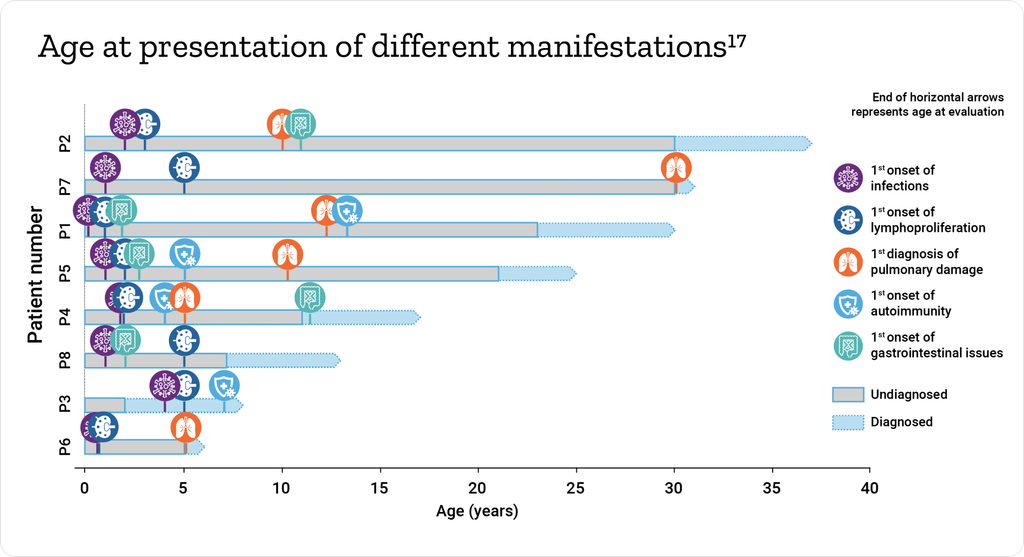
Whilst most patients experience recurrent infections during their childhood, APDS is unpredictable and highly variable in its manifestations, with patient journeys progressing very differently.3,5,6,12,17
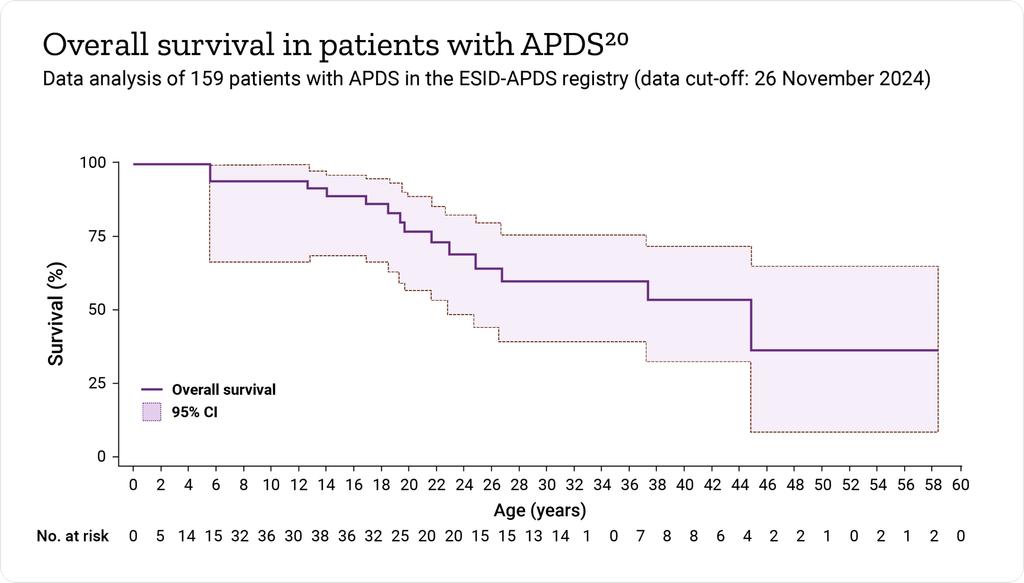
Over time, unchecked immune deficiency and dysregulation can progress to multi-system damage and early mortality, with over one in four patients not surviving to the age of 30 years.1,3–6,12,18,19
Symptomatic manifestations of APDS can also have a profound impact on patient health-related quality of life, including substantial burdens on a patient’s social and mental wellbeing such as missing school, work or leisure activities, and loneliness, anxiety and depression.8,12, 21–24

Bodily pain

Fatigue

Breathing difficulties

GI Symptoms
which can often include diarrhoea so severe it requires hospitalisation

Difficulty moving

Eating and swallowing difficulties

Skin problems
Patient identification
The diagnostic journey for patients with APDS is complex and may take many years due to limited awareness, variation in presentation and overlap with other inborn errors of immunity.4,6,8,17 Throughout this journey patients may be referred to several different specialists based on their presenting symptoms.6,8
Identification of the clinical features of APDS can support earlier diagnosis for patients with APDS, reducing delays.25
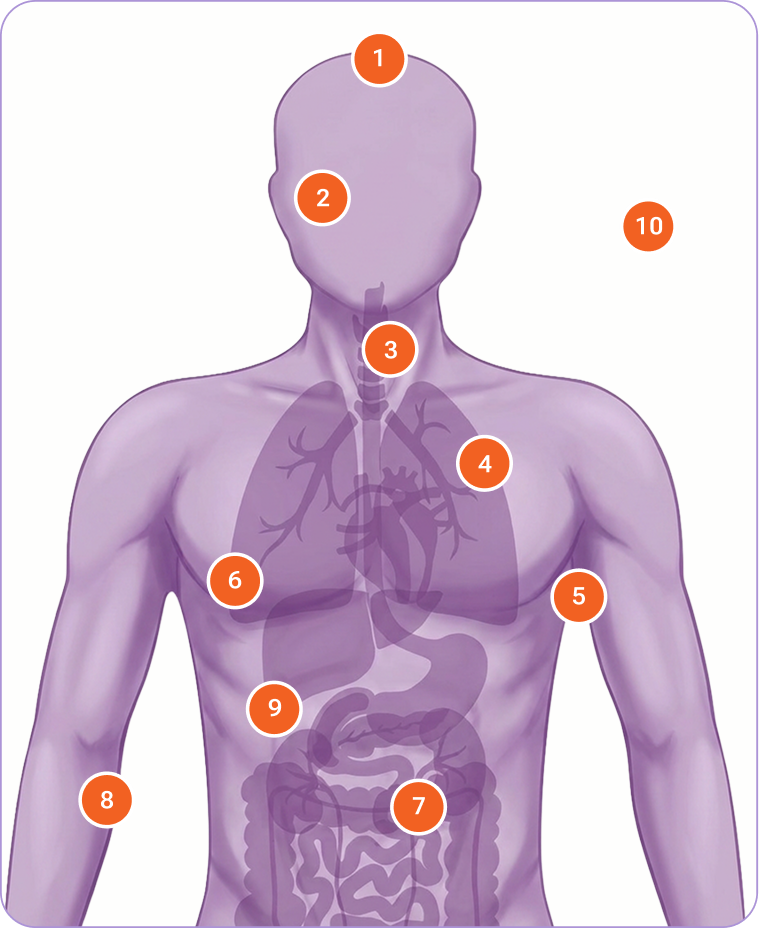
APDS should be considered in patients with 2 or more of these clinical signs or symptoms:25
- Developmental (cognitive and/or growth) delays
- ≥2 sinus infections, pneumonias, or ear infections in one year
- Autoimmune/autoinflammatory condition
- Persistently swollen lymph nodes
- Lymphoma (or history in family)
- Persistent cough, uncontrolled asthma, or bronchiectasis
-
Frequent and severe diarrhoea
lasting >4 weeks - Recurrent herpes viral infections (especially chronic CMV/EBV)
- Hepatomegaly or splenomegaly
- Family history of IEl or CVID
Diagnosis
Early diagnosis of APDS is crucial as it can change the course of management and outcomes for patients. Through an earlier definitive diagnosis, patients can gain access to Joenja, which targets the underlying immune deficiency and dysregulation of APDS, allowing for improved clinical outcomes.8,17,26,27